South Korea Leads Crypto Volume, Japan Dominates BTC Liquidity
South Korea drives 30% of crypto volume, while Japan shows stronger Bitcoin liquidity, highlighting contrasting market dynamics in Asia.

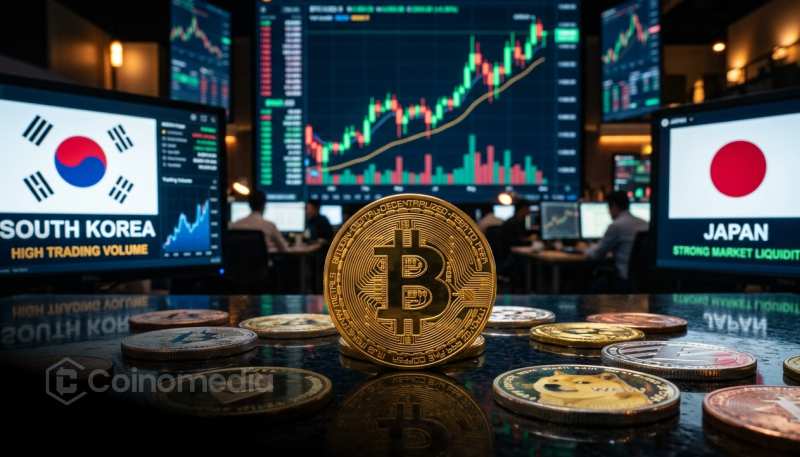
- South Korea accounts for ~30% of global crypto trading volume.
- 85% of South Korean trades are focused on altcoins.
- Japan has 3–5x deeper Bitcoin liquidity despite lower volume.
South Korea crypto volume continues to stand out globally, contributing nearly 30% of total trading activity. According to insights from Kaiko, this dominance is largely driven by retail investors who show a strong preference for altcoins rather than Bitcoin.
Around 85% of trading volume in South Korea is concentrated in alternative cryptocurrencies. This trend reflects a higher appetite for risk and short-term gains among local traders. Many investors in the country actively seek emerging tokens with the potential for rapid price movements, rather than sticking to established assets.
This behavior has helped local exchanges maintain high activity levels, often outperforming global averages in daily trading volume.
Japan’s Bitcoin Liquidity Tells a Different Story
While Japan’s overall crypto trading volume is significantly lower, the country excels in Bitcoin market stability. Data shows that Japan has 3–5 times deeper Bitcoin liquidity compared to South Korea.
This means that large buy or sell orders in Japan have less impact on Bitcoin’s price, creating a more stable trading environment. Institutional participation and stricter regulatory frameworks are key factors behind this liquidity strength.
Japanese traders tend to favor Bitcoin over altcoins, resulting in a more balanced and less volatile market structure.
Two Markets, Two Strategies
The contrast between South Korea crypto volume and Japan’s liquidity highlights two very different approaches to digital assets.
South Korea thrives on high-frequency trading and altcoin speculation, making it one of the most active crypto hubs in the world. On the other hand, Japan focuses on depth, stability, and long-term value, particularly within Bitcoin markets.
These differences underline how regional preferences and regulations shape the global crypto landscape. For investors and analysts, understanding these dynamics is essential when evaluating market trends and opportunities in Asia.