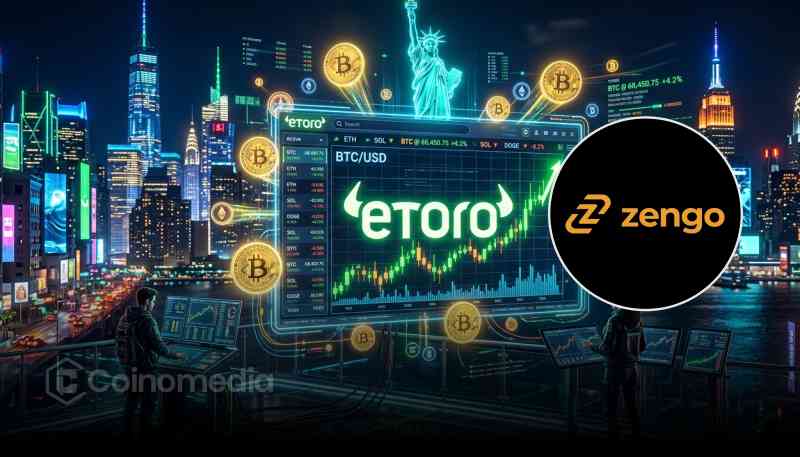
eToro Zengo Acquisition Boosts Crypto Security
eToro acquires Zengo to strengthen crypto self-custody and security features for users worldwide.

- eToro acquires Zengo to expand self-custody solutions
- Focus on improving wallet security and user control
- Move reflects growing demand for safer crypto storage
The eToro Zengo acquisition marks a significant move in the evolving crypto landscape. eToro, a well-known social trading platform, is taking a bold step by acquiring Zengo, a company recognized for its secure, keyless crypto wallet technology. This decision highlights eToro’s commitment to offering users more control over their digital assets.
Self-custody has become an important topic in crypto, especially after several high-profile exchange failures. Users are now more aware of the risks of leaving assets on centralized platforms. By integrating Zengo’s technology, eToro aims to give users a safer way to store and manage their cryptocurrencies independently.
Why Zengo’s Technology Matters
Zengo stands out because of its unique approach to wallet security. Unlike traditional wallets that rely on private keys, Zengo uses multi-party computation (MPC). This removes the single point of failure, making it harder for hackers to gain access.
With the eToro Zengo acquisition, users can expect enhanced protection without the complexity often associated with self-custody wallets. This could make crypto more accessible to beginners while still offering strong security features for experienced users.
What This Means for eToro Users
For eToro’s large user base, this acquisition could lead to new features focused on security and ownership. Users may soon have the option to move assets into a more secure, self-custodied environment without leaving the platform’s ecosystem.
This move also positions eToro as a stronger competitor in the crypto space. As more platforms explore self-custody solutions, integrating advanced wallet technology could become a key differentiator.
Overall, the eToro Zengo acquisition reflects a broader shift in the industry. Security, transparency, and user control are becoming top priorities, and companies that adapt quickly are likely to lead the next phase of crypto adoption.