Intersecting RWAs and Utility Tokens The nGRND Gold Protocol
Explore how nGRND connects NGRND staking, Web3 rewards, and a future Preserved Gold token while keeping their purposes distinct.

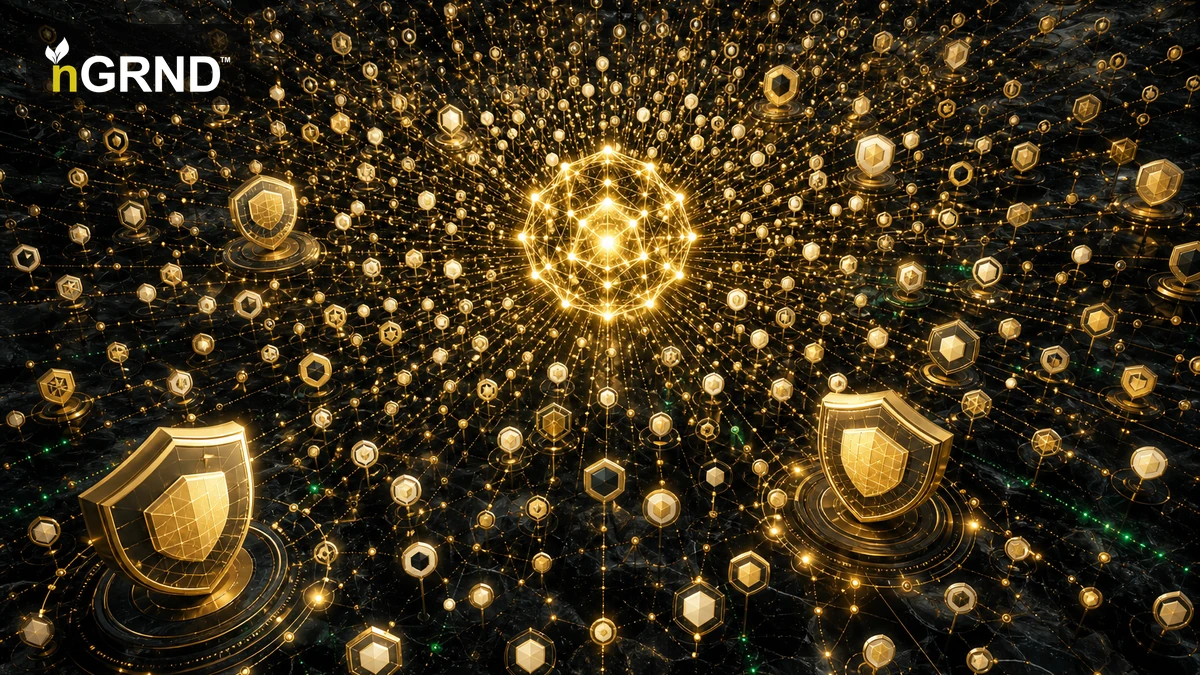
Web3 becomes easier to understand when each token has a clear job. Some tokens represent rights connected to real-world assets. Others provide access to digital services, participation opportunities or ecosystem benefits. The nGRND Gold Protocol brings these ideas into one broader model while keeping their purposes distinct. Its Staking & Rewards Ecosystem is built around NGRND, a utility token, while a separate future nGRND Gold Token is intended to represent Preserved Gold.
An RWA, or real-world asset, token connects a digital token with an asset or associated rights outside the blockchain. The details of that connection matter. A token needs a legal and operational structure explaining what it represents, who controls the underlying rights and what the holder can actually do. Putting a token on a blockchain does not, by itself, establish ownership, redemption rights or a reliable value for the asset it references. That theme runs through recent coverage of the sector. In his August piece on the push to tokenize everything, Forbes contributor Boaz Sobrado put tokenized real-world assets on public blockchains at roughly $31 billion, citing RWA.xyz, and noted that legal and regulatory complexity slows adoption, with nGRND’s in-ground gold among the examples discussed.
The proposed nGRND Gold Token addresses the asset side of the model. It is intended to directly represent Preserved Gold: verified gold remaining in its natural location. The amount represented, valuation methodology and token-holder rights are to be defined within the legal and regulatory structure of the offering. This differs from treating every gold-related digital token as an interchangeable claim on refined bullion. The resource and preservation arrangements need to be understood on their own terms. Speaking to CCN in July, nGRND Chair David Lucatch said the company intends to issue tokens against only a small proportion of each verified resource, with qualified persons signing off on the amount and classification of the gold, as a way to manage risk.
NGRND has a different purpose. It powers participation in the nGRND Gold Protocol Staking & Rewards Ecosystem. Participants can own and stake NGRND, engage in activities and build their position within the rewards framework. Generally, more staking can increase a participant’s Reward Level, while participation can influence weighting and potential access to available Rewards. This is a utility proposition linked to ecosystem use, rather than a direct claim to an allocated quantity of gold.
The intersection becomes useful when the asset story and the participation experience support a shared purpose. Preserved Gold gives the Protocol a foundation connected to natural resources and measured impact. The utility ecosystem gives people activities they can understand and use. Someone may first arrive through a game, a learning activity or a partner community, then discover the wider preservation model. Others may arrive because of an interest in gold and become active participants.
Eight Participation Streams provide different entry points: Governance, Impact, Play, Learn, Advocate, Refer, Wellbeing and Agent. This range matters because people have different interests and abilities. A person who enjoys games may participate differently from someone interested in education or community advocacy. Bringing those activities into a common ecosystem creates more potential uses for the utility token and gives partners ways to connect with an existing participant community.
The DSBT, or Dynamic Soulbound Token, connects the participant with that ecosystem. It is designed as a permanent, non-transferable credential attached to a Base wallet, with a record that can evolve through participation. Its role is different again: it provides a participation identity and access framework. Keeping the utility token, the DSBT and the future RWA token separate helps people understand what they hold and why each component exists.
The growth figures show that the utility experience already has meaningful reach. Following the August 6, 2026 launch, the dashboard reports 283,024 total accounts and 254,870 DSBT holders. It records 273,313 email-verified accounts, providing a concrete verification measure, and 3,551,789 task completions. These figures support a claim of early ecosystem adoption. They do not establish the issuance, valuation or market success of the separate future RWA token.
The activity measures make the story more substantial. There are 48,982 daily active accounts, 125,737 weekly active accounts and 236,063 monthly active accounts in the snapshot. People are engaging with the participation layer, which is an important achievement for a Web3 project. Continued engagement can make the ecosystem more useful to partners and create further opportunities for NGRND utility. It does not guarantee token appreciation or future Rewards.
Eligible Rewards from the nGRND Group activities in the gold arena are intended to be distributed for Ecosystem participation in stablecoins such as USDC or USDT, subject to applicable laws, eligibility, treasury performance and program terms. That gives each component a clear role: NGRND supports participation, stablecoins provide the intended Rewards, and the future nGRND Gold Token addresses Preserved Gold representation. The opportunity at nGRND.io is to connect these roles in a practical ecosystem where people understand the assets, use the services and have reasons to keep participating.
Get grounded 🪙
@nGRND_io @nGRNDesg @DigItGoldGame @GAMEEToken @predictfully_ @Astra__Nova @FirstClassMetal