Grok Suggests Cutting 89% of EU Laws
Grok EU Laws analysis proposes deleting 89% of active EU regulations, sparking debate on overregulation and AI-driven policy review.

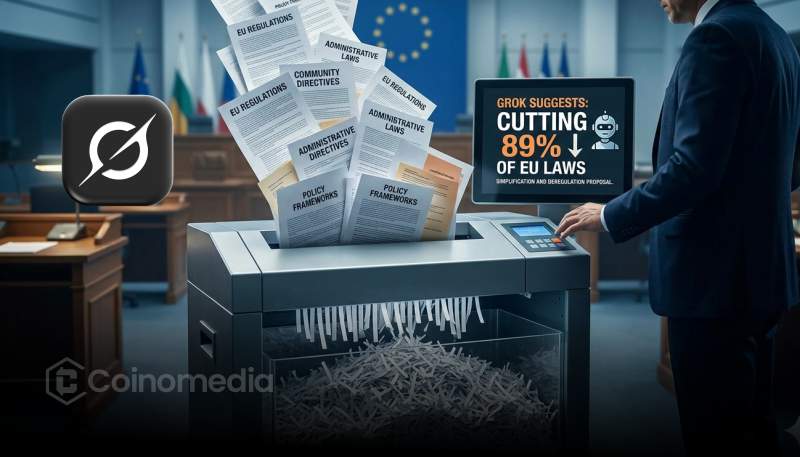
- Grok EU Laws analysis recommends removing 89% of EU regulations.
- The AI reviewed the entire EU rulebook to identify inefficiencies.
- The proposal raises questions about regulation and AI in policymaking.
Grok EU Laws Analysis Shocks Policymakers
A bold claim is stirring discussion across policy and tech circles. Grok EU Laws analysis suggests that nearly 89% of active European Union laws could be removed. The AI reportedly reviewed the full body of EU regulations and identified what it considers redundant, outdated, or overly complex rules.
This kind of sweeping recommendation is unprecedented. Governments typically revise laws gradually, but Grok’s findings propose a dramatic reset. While the idea may sound extreme, it has quickly captured attention for highlighting how complex modern regulatory systems have become.
What the Grok EU Laws Findings Reveal
At the core of the Grok EU Laws report is a concern about efficiency. Over time, layers of regulation have built up, sometimes overlapping or conflicting with one another. According to the analysis, simplifying the system could improve clarity, reduce compliance costs, and make it easier for businesses to operate across the EU.
However, such a large-scale reduction also raises concerns. Laws exist to protect consumers, workers, and markets. Removing too many rules without careful review could create risks. Experts argue that while AI can identify patterns, human judgment is still essential when deciding which laws should stay or go.
Debate Grows Around AI in Governance
The Grok EU Laws proposal also opens a bigger conversation about the role of artificial intelligence in governance. Can AI systems help streamline policymaking, or should they remain advisory tools?
Supporters believe AI can bring speed and objectivity to complex legal reviews. Critics, on the other hand, warn about oversimplification and the lack of accountability. The idea of cutting 89% of laws may not be realistic, but it highlights a growing trend: governments exploring AI to improve decision-making.
As discussions continue, one thing is clear—Grok EU Laws analysis has sparked a debate that goes far beyond regulation, touching on the future relationship between technology and policy.
Read Also:
- Is APEMARS the Top Crypto Presale to Buy in March? Stage 13 Hits 3,600% ROI Potential While Pepe and Pi Follow the Wave
- T-REX Network and Zama Launch Institutional-Grade Confidentiality Infrastructure for RWA Tokenization
- Nvidia Faces Lawsuit Over Crypto Mining Revenue
- BTC Market Bottom? Why It May Be Too Early
- Chainlink Wallets Hit 25,420 as Whales Load Up