Coinbase CEO Says US Crypto Regulation Will Move Forward
Coinbase CEO Brian Armstrong says U.S. crypto regulation will continue to advance, with SEC and CFTC rulemaking serving as a fallback if the Clarity Act stalls.

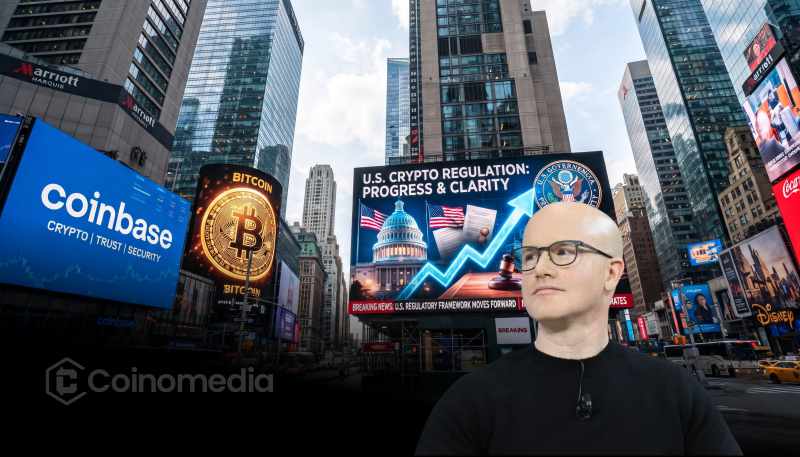
- Brian Armstrong says U.S. crypto regulation will move forward regardless of the Clarity Act’s outcome.
- SEC and CFTC rulemaking could serve as a fallback if the legislation stalls.
- Armstrong expects continued progress toward a clearer regulatory framework for digital assets.
Coinbase CEO Brian Armstrong says U.S. crypto regulation is expected to move forward regardless of whether the proposed Clarity Act becomes law.
According to Armstrong, if Congress fails to advance the legislation, regulatory agencies such as the U.S. Securities and Exchange Commission (SEC) and the Commodity Futures Trading Commission (CFTC) could continue developing rules through their existing rulemaking processes.
His comments reflect growing expectations that the regulatory environment for digital assets will continue to evolve.
SEC and CFTC Could Fill the Gap
Armstrong said SEC and CFTC rulemaking could provide a fallback path for establishing clearer crypto regulations if legislative efforts slow.
Both agencies have been actively involved in shaping oversight of the digital asset industry, and additional rulemaking could offer greater clarity for exchanges, issuers, and investors. While legislation would provide a more comprehensive framework, agency-led regulations could still address key areas of the market.
The remarks underscore the multiple paths available for regulatory development.
Industry Awaits Greater Clarity
The latest US crypto regulation comments highlight the industry’s continued focus on achieving a more predictable legal framework.
As policymakers and regulators debate the future of digital asset oversight, market participants will be watching both congressional action and agency rulemaking. Greater regulatory clarity is widely viewed as an important step toward supporting innovation while strengthening investor protections.