US Dollar Reserve Share Falls to Century Low
The US dollar’s share of global foreign currency reserves drops to its lowest level this century amid rising de-dollarization efforts.

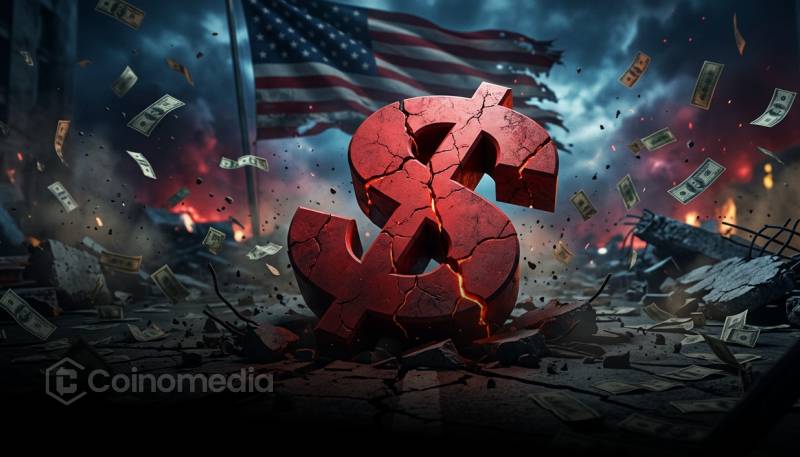
- The US dollar reserve share has hit its lowest level this century.
- Central banks are increasingly diversifying away from the dollar.
- Growing de-dollarization trends are reshaping global finance.
US Dollar Reserve Share Drops Sharply
The global financial system may be entering a major transition as the US dollar reserve share falls to its lowest level this century. New data suggests central banks and large financial institutions are steadily reducing their exposure to the dollar as geopolitical tensions and economic uncertainty continue to rise.
For decades, the US dollar has dominated global trade and foreign currency reserves. It has been viewed as the world’s safest reserve asset, giving the United States enormous influence over international finance. However, recent developments indicate that many countries are now actively seeking alternatives.
Why the US Dollar Reserve Share Is Declining
Several factors are driving the decline in the US dollar reserve share. One of the biggest reasons is the growing push toward de-dollarization. Countries including China, Russia, and members of the BRICS alliance have increasingly explored trade settlements using local currencies instead of the US dollar.
Rising geopolitical tensions and sanctions policies have also encouraged nations to diversify their reserves. Many governments fear becoming too dependent on a single currency controlled by the United States.
At the same time, central banks have been increasing purchases of gold and alternative reserve assets. Some institutions are also expanding exposure to currencies such as the euro and Chinese yuan.
Global Markets React to De-Dollarization Trends
The decline in the US dollar reserve share has become a major topic among economists and investors. Some analysts believe the trend could weaken America’s long-term financial dominance if it continues over the coming decade.
Others argue that while the dollar’s share is falling, it still remains the world’s leading reserve currency by a wide margin. The US financial system continues to offer deep liquidity, strong institutional infrastructure, and global trust compared to most alternatives.
Still, the shift signals that the global economy is becoming increasingly multipolar, with nations looking for more flexibility in international trade and finance.
What Happens Next?
Experts believe the transition away from the dollar is likely to happen gradually rather than suddenly. A complete replacement of the dollar remains unlikely in the near future, but the steady reduction in reserve exposure highlights changing global priorities.
Investors are closely watching how central banks, emerging economies, and geopolitical alliances continue adjusting their reserve strategies in the years ahead.
Read Also:
- BlockDAG Triggers Buyback Upgrade With 72-Hour Window, While Avalanche & Chainlink Rally
- Cardano Price To Hit $0.60 Before December; Latest On XRP Price Prediction & BlockDAG News
- Top Crypto Favorites With 5000x Growth Potential: XRP, Litecoin, and BlockDAG (BDAG)
- Ethereum Exchange Supply Hits Record Low of 3.49%
- Crypto Market Is on the Rise – HYPE Is Up 20%, Solana Rises 16%, While INVEST Network (INVST) Presale Crosses $7M